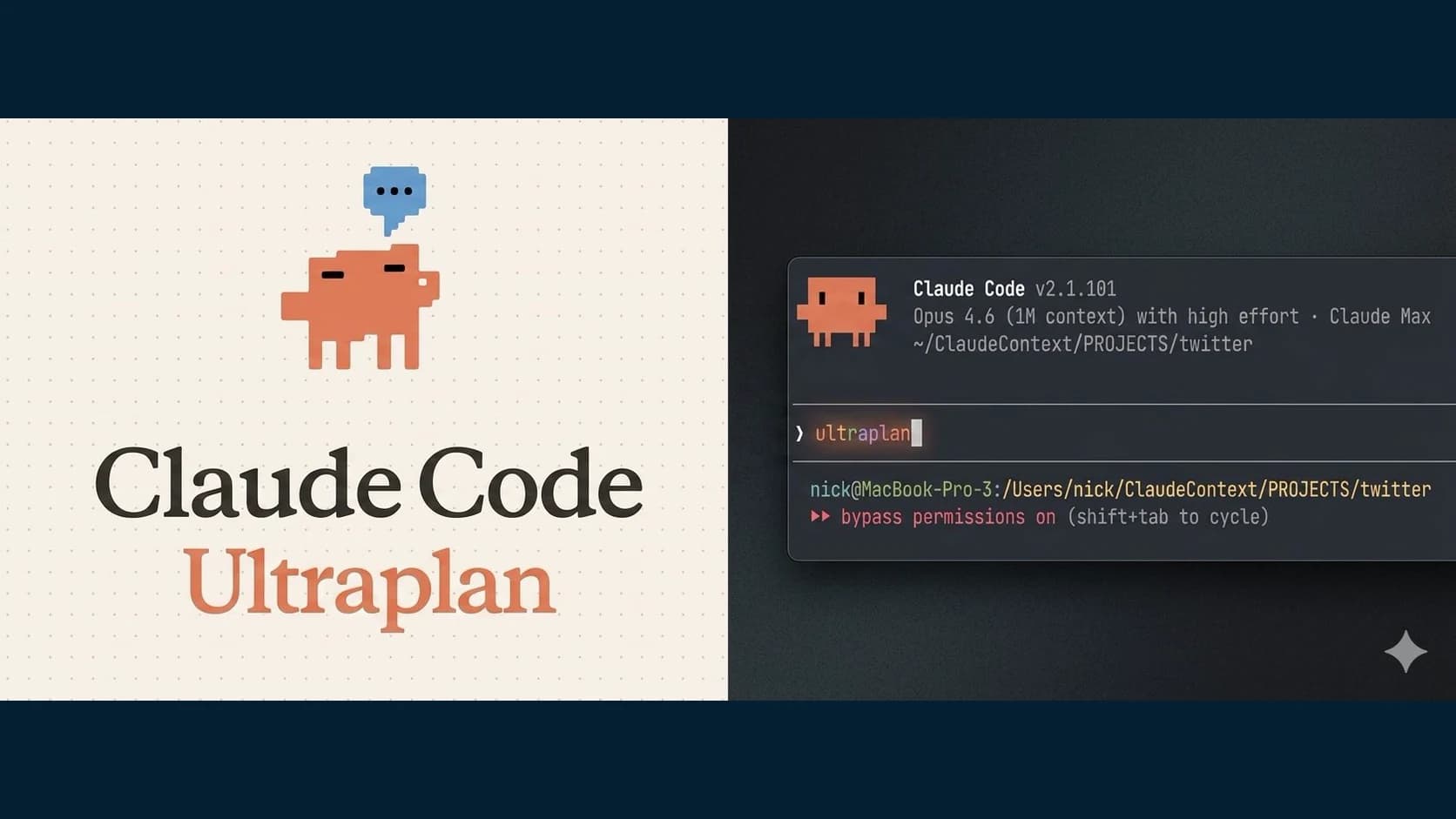
The important part of Ultraplan is not a rumored agent count or a speed multiplier. It is the review surface.
Anthropic currently describes Ultraplan as a research-preview workflow that hands planning from Claude Code to a cloud plan-mode session. You can review the result in a browser, leave comments, revise sections, then choose remote execution or return the plan to the terminal. Current prerequisites and behavior can change, so check the official Ultraplan documentation before relying on it.
Why browser review matters
Local plan mode is fast, but review often turns into a long chat: ask why a dependency was missed, receive a replacement plan, compare the two, and hope the important section survived.
A persistent review surface changes that. I can comment directly on the risky assumption, share the plan with another reviewer, and preserve the reasoning before implementation begins. The plan becomes an artifact instead of terminal history.
I do not assume a fixed internal agent topology or model. The product docs do not promise one, and implementation details are allowed to change. What I can inspect is the output: files mapped, dependencies traced, alternatives considered, tests named, and rollout bounded.
When I use it
Multi-file changes. One wrong path assumption can cascade through scheduled jobs, docs, tests, and deployment configuration. A remote planning pass is worthwhile when mapping those references is the hard part.
Architecture with several valid answers. Monorepo versus multiple repos, polling versus events, or a new service versus an existing boundary. I want explicit tradeoffs and a place to challenge the decision.
Non-code systems stored in GitHub. Content operations, automation configs, brand guidance, and client onboarding are still systems. A repository gives them history and review.
Work that needs discussion before execution. If another person must approve scope, security, or data handling, a browser artifact is much easier to examine than an active terminal session.
Plans I would review for twenty minutes anyway. That is my personal threshold, not a performance guarantee. If review is already the expensive part, improving the review surface is usually rational.
When local plan mode wins
I stay local when the change is small, the repository cannot be handed to a cloud environment, I am offline, or the planning overhead would exceed the work. A one-file copy fix does not need a ceremony.
Ultraplan also depends on current product requirements, including a supported Claude Code version, compatible authentication, a web account, and a GitHub repository. Cloud environments and third-party model-provider configurations may have additional limits. Verify those requirements in the official documentation on the day you use it.
My review checklist
Before executing any plan, I ask:
- Does it name the exact files and existing patterns?
- Does it distinguish observed repository truth from assumptions?
- Are security, privacy, and destructive actions bounded?
- Do tests fail before the change and prove the right behavior after it?
- Is documentation part of the work when behavior changes?
- Is the final verification something the agent can actually run?
Ultraplan can make planning easier to inspect. It cannot make an unreviewed plan correct. The operator still owns the objective, the constraints, and the decision to execute.