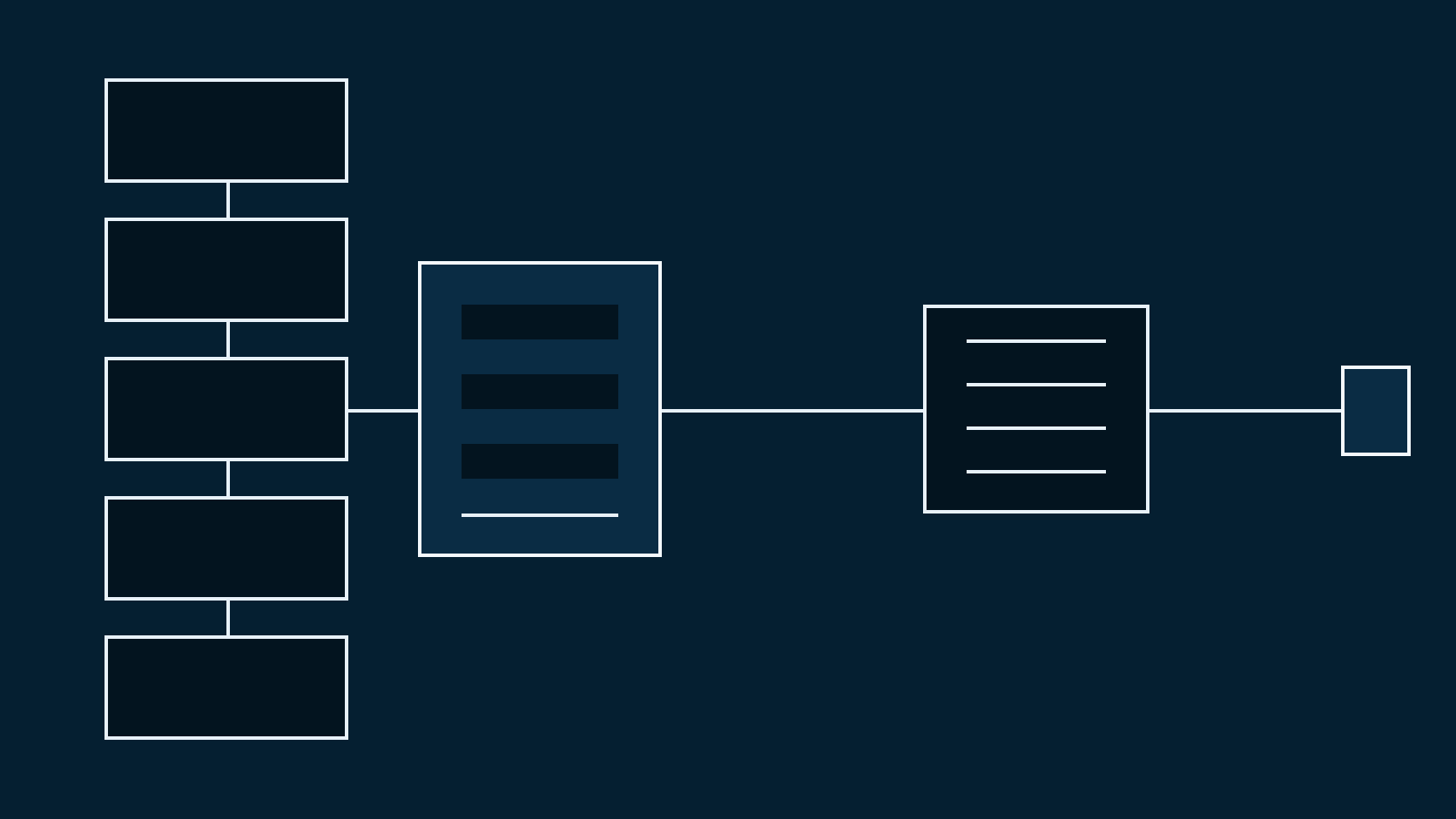
A generic chatbot gives an average answer. An AI operator should route a business problem through a specific body of evidence, explain the reasoning, and end with an action you can review.
I build operators around four architecture decisions: curate the corpus, transcribe responsibly, distill the signal, and evaluate before trust.
1. Curate instead of scrape
Every expert gets a manifest of authorized sources. I rank sources by authority and signal: books or owned training, long-form videos, guest interviews, and published writing. I exclude clips, duplicates, off-topic appearances, and anything I do not have the right to process.
Each row records the source, owner, category, publication date, access basis, and priority. The manifest is the boundary. If a source is not approved, the pipeline does not quietly ingest it.
This prevents a short reaction clip from carrying the same weight as an expert's full framework.
2. Use caption-first transcription carefully
For content you own or are authorized to use, existing captions can reduce unnecessary transcription. The YouTube captions API exposes caption resources, but caption availability and download access depend on permissions. If usable captions are not available, local open-source transcription such as Whisper is an option; compute, review time, and accuracy still have costs.
Every transcript keeps a pointer to the source and timestamps. Low-confidence sections are flagged. Names, numbers, and claims get human review before they become durable knowledge.
3. Distill instead of dumping
A large transcript corpus is not automatically useful. In my systems, raw content stays in an evidence layer. A separate process extracts:
- frameworks and their steps;
- decision rules and exceptions;
- examples with source citations;
- voice patterns;
- disagreements or changes over time.
Then I deduplicate and rank the results by evidence, specificity, and recency. These are architecture choices based on my observed tradeoffs, not a universal threshold for every corpus.
A framework entry should name the problem, the steps, when to use it, when not to use it, and the strongest supporting sources. A voice entry should describe rhythm and preferences without turning personality into parody.
4. Evaluate before trust
I build a small test suite from real operating questions. Each test includes a prompt and a checklist describing what a strong answer should contain. The operator answers using the approved knowledge. A separate review step scores the answer against that checklist and verifies cited evidence.
One evaluation recipe is never universally sufficient. High-stakes domains require domain experts, adversarial cases, privacy controls, and stricter release gates. The important rule is that failures return to the corpus or instructions; they do not get explained away.
The four-part instruction layer
My operator instructions usually contain:
- Role: which business decisions this operator supports.
- Routing: how it selects the right framework or mode.
- Evidence: how it cites, qualifies uncertainty, and handles missing context.
- Output: how it turns reasoning into a reviewed next action.
Specialist modes can focus on pricing, negotiation, pipeline, operations, cash flow, or positioning. They are lenses, not autonomous executives. Consequential sends, payments, customer commitments, and system changes remain approval-gated.
Start with one operator
Do not begin by cloning an entire advisory board. Choose one expert or one internal operating domain with clear source rights. Write the manifest. Build the evidence layer. Distill a small set of useful frameworks. Create ten hard questions. Track where the operator fails.
The result is not an oracle. It is a reviewed interface to evidence you deliberately chose. That boundary is what makes an AI operator more useful than a chatbot—and safer than an agent pretending to know your business.