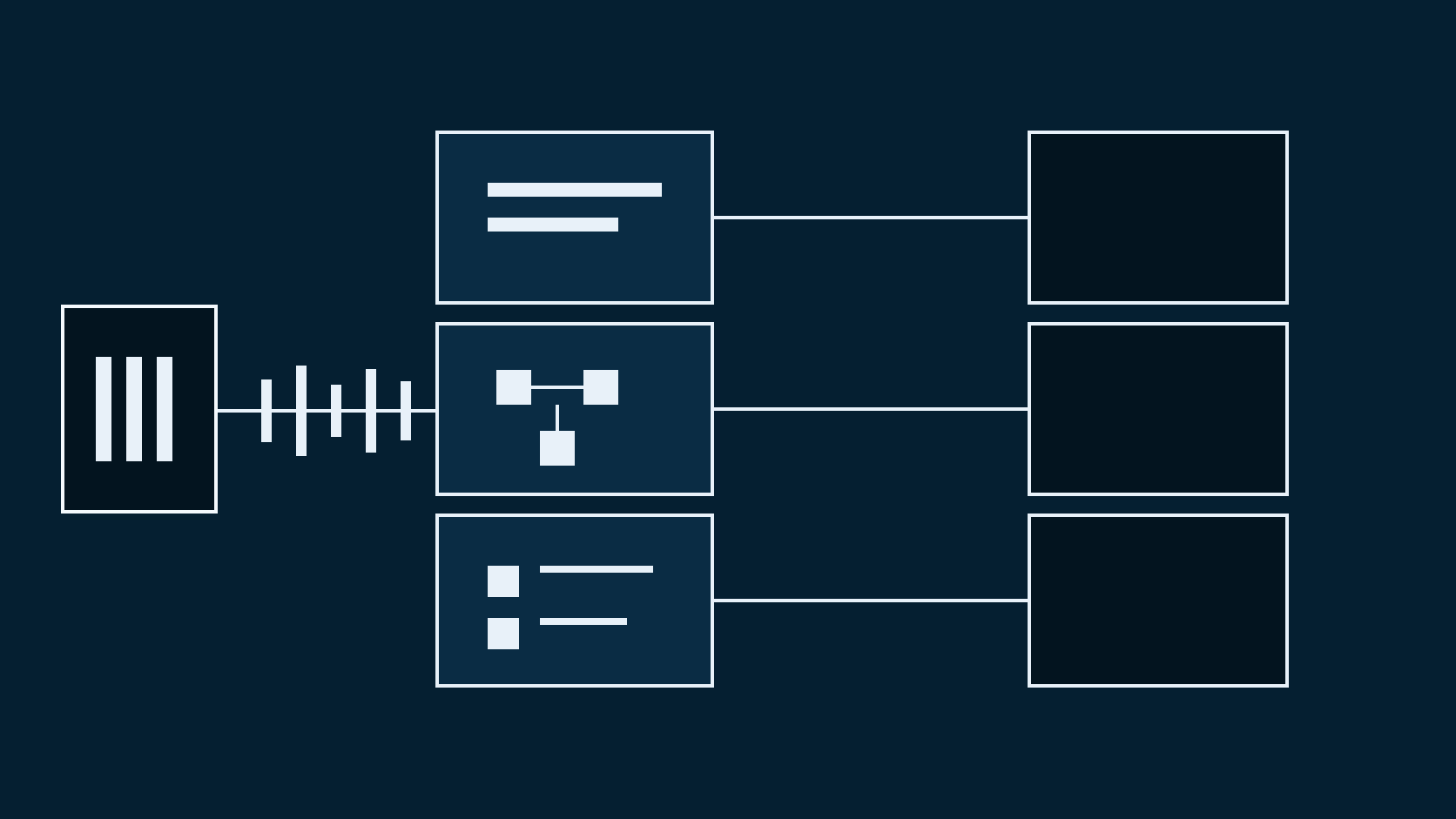
A transcript is not a second brain. It is raw material.
I use meeting capture because my best operating knowledge often appears while I am explaining a decision, diagnosing a client problem, or assigning work. Fathom's current feature documentation describes transcripts, summaries, and action-item capabilities, subject to the meeting and plan. The important part begins after capture: turning those records into durable context an agent can use.
Plan more than you execute
For agentic work, I spend most of my attention on the plan. The keyboard work is usually the cheap part. The expensive failures come from solving the wrong problem, leaving a decision implicit, or giving the agent conflicting sources.
After a useful meeting, I pull the transcript into the project and ask the agent to identify decisions, constraints, unanswered questions, named owners, and evidence. I review that extraction against the recording before it becomes authoritative.
Keep the North Star human-owned
You can delegate synthesis. You cannot outsource understanding.
I write the North Star myself: one sentence explaining the outcome and why it matters. The agent may challenge it or surface contradictions, but it does not get to replace it with a more convenient objective.
This matters because transcripts are full of conversational detours. Without a North Star, an agent treats every sentence as equally important.
Use a five-part project brief
Every project I scope uses the same skeleton:
- North Star objective: the outcome in one sentence.
- Technology to leverage: the tools and systems already available.
- Desired outcome: what the first useful iteration looks like.
- Success criteria: observable checks that prove it worked.
- Research questions: gaps that must be answered before building.
I link each important requirement back to the meeting or source that justified it. That makes the brief auditable and prevents confident inventions later.
Work in a real folder
You do not need to be a developer to use an editor. I like VS Code because the project is visible: notes, transcripts, requirements, decisions, drafts, and reusable instructions all live together.
Markdown is my default. It is portable, diffable, searchable, and easy for humans and agents to read. The folder becomes the memory; the chat is only the interface.
Delegate how, hold the line on what
Once the brief is approved, I let the agent propose implementation details. I do not dictate every command. But I keep the objective, safety boundaries, and success criteria fixed unless new evidence justifies a change.
When the agent discovers a conflict, it records the decision instead of silently improvising. That decision log becomes part of the second brain.
Turn repeated work into a skill
If I explain the same process twice, I package it. A skill starts with clear instructions and can also include scripts, templates, references, and examples. It should say when to run, what inputs it accepts, what it must never do, and how to verify the output.
Configured connectors can extend an agent into systems such as Notion or X, but only after authentication, permission scoping, and review. Access is never assumed.
Learn through controlled use
The fastest way to understand this system is to use it on a real, low-risk project. Capture one meeting. Build one brief. Let the agent perform one bounded task. Review the result and improve the instructions.
Over time, the second brain becomes a record of how you make decisions—not merely a warehouse of things you once said.